GTA 6 Is Built to Be Lived In (And That Cuts Both Ways)
GTA Online is already a second life for millions, funded by 4% of players. GTA 6 adds bodies that keep score and police who remember you. What that pull means.
Updated
There’s something the GTA community doesn’t discuss enough - what happens when a game becomes so immersive that people stop logging off?
GTA Online is already a second life for a lot of people - and that’s on thirteen-year-old tech. GTA 6 has characters whose bodies change when they eat, drink and skip sleep, police who remember your face, and a Vice City that reacts to everything you do. The pull is about to get exponentially stronger.
So what happens when the next generation of this world is so convincing you forget it isn’t real?
Image courtesy of Rockstar Games
The Second Life You’re Already Living
Let’s be honest about what GTA Online is in 2026. Rockstar doesn’t publish player counts, so I won’t invent one. What we have instead is better: Rockstar’s own internal numbers, leaked by the ShinyHunters group in April 2026 and confirmed by Rockstar as a real breach with, in its words, “a limited amount of non-material company information.”
The $5 Billion Digital Economy
Kotaku’s Zack Zwiezen went through the data on April 13. GTA Online was bringing in about $1,319,322 a day and $9,592,109 a week, roughly $498.8 million a year - more than eighteen times Red Dead Online. PS5 alone accounted for $4.5 million of every week. Between 2014 and 2024, the files showed, Rockstar made over $5 billion from Shark Cards - real money for fake money. And only around 4% of GTA Online players spent anything at all in the seven months the data covered.
Four per cent. Sit with that. The entire economy of the most profitable online mode in gaming is carried by one player in twenty-five, and some of them carry a lot. TweakTown’s Jak Connor found the single biggest Shark Card transaction in the leak: $1,030,926, by one person, in 2020, with the second and third largest at $984,000 and $953,000. “Almost all of the extremely large transactions were made on Christmas Day.” People weren’t just playing through the holidays. They were living there, and paying like it.
Take-Two’s share price went up the morning the numbers leaked. VGC’s Jordan Middler watched it open around $202 and climb to nearly $208, roughly a billion dollars of market cap added because hackers proved how much people spend.
The RP Rabbit Hole
Then there’s roleplay. GTA RP servers on FiveM turned a 2013 game into what Rolling Stone’s Alyssa Mercante called “a kind of contemporary crime-ridden Second Life” - “a chance to socialize in a space that feels more comfortable than the real world.” Players build characters with jobs, relationships and reputations, and keep them for years.
One line from that piece stuck with me. Lord Kebun, one of the scene’s biggest streamers, told Rolling Stone: “There are a lot of people on the server that aren’t very outgoing, or they’re a little more introverted, and RP helps bring that extrovert out in them.” That’s not gaming. That’s identity work. And Rockstar knows it - it bought FiveM in 2023, and on September 2, 2026 it put its own name on nopixel V, “proud to support nopixel - who have continually pushed the boundaries of GTA Roleplay,” with invited players getting in through the Rockstar Games Launcher from September 8.
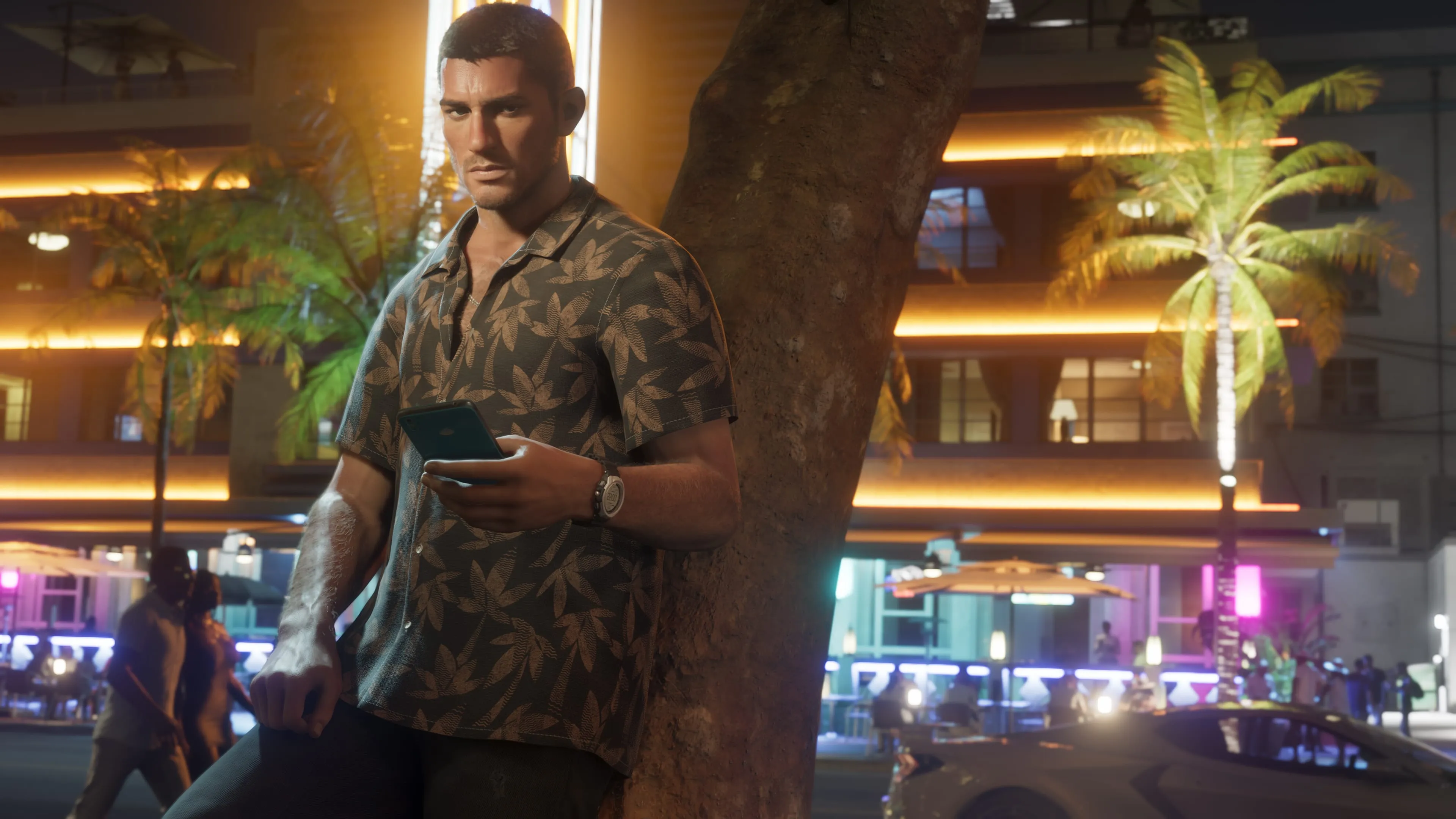
Image courtesy of Rockstar Games
The Addiction No One Wants to Talk About
Here’s where it gets uncomfortable. The World Health Organization put gaming disorder in the eleventh revision of its International Classification of Diseases in 2018. Its definition: “a pattern of gaming behavior characterized by impaired control over gaming, increasing priority given to gaming over other activities to the extent that gaming takes precedence over other interests and daily activities, and continuation or escalation of gaming despite the occurrence of negative consequences.” The WHO also says it “affects only a small proportion of people” who game. How small depends on who’s counting - a 2024 meta-analysis by Zhou and colleagues, pooling twenty-two studies, put internet gaming disorder at 6.7% overall and 7.1% among adolescents. Different studies with different criteria land lower. None of them land at zero.
The Lawsuits Are Real
There are lawsuits, and GTA is named in them. In June 2024 the US Judicial Panel on Multidistrict Litigation considered a set of “individual personal injury actions alleging that video game developers, digital app stores, and other technology companies have developed and sold video games and related products with psychologically addictive features for the purpose of causing addiction to video games among minors and young adults” - features like “feedback loops, reward systems, pay-to-win options, and artificial intelligence mechanisms.” The defendants included Rockstar Games and Take-Two alongside Epic, Roblox, Microsoft, Sony and Nintendo. The panel declined to combine the cases, because “there is a broad range of games and defendants in each action.” So they proceed one at a time. Nothing has been proven against Rockstar. The allegation is on the record.
The Casino Problem
The casino is where the design gets sketchiest. You buy Shark Cards with real money, convert them to GTA dollars, then to chips, then gamble - and you can only ever win back in-game currency. Real money in, no cash out. When the Diamond Casino opened in 2019, PCGamesN reported players in over fifty countries couldn’t use the tables at all, “likely linked to local gambling laws.” In July 2026, per Dexerto, Australia joined the list, with the casino games switched off in what Dexerto links to the country’s new online safety and age-assurance rules. Seven years on, governments are still deciding that a casino with no payout is still a casino.
What Rockstar Has Said About GTA 6
Credit where it’s due. At the August previews, Kinda Funny asked Rob Nelson whether GTA 6 has microtransactions and whether generative AI built it, and GamesRadar+ reports his answer to both as “no.” Rockstar calls the game “a single player experience.” There’s no Shark Card equivalent in the story mode, because there’s no store in it. What comes with the next online mode is a different question, and Bloomberg’s Jason Schreier says Rockstar is “not planning to talk anytime soon” about it. GamesRadar+‘s Scott McCrae doubts it ships without Shark Cards. So do I.
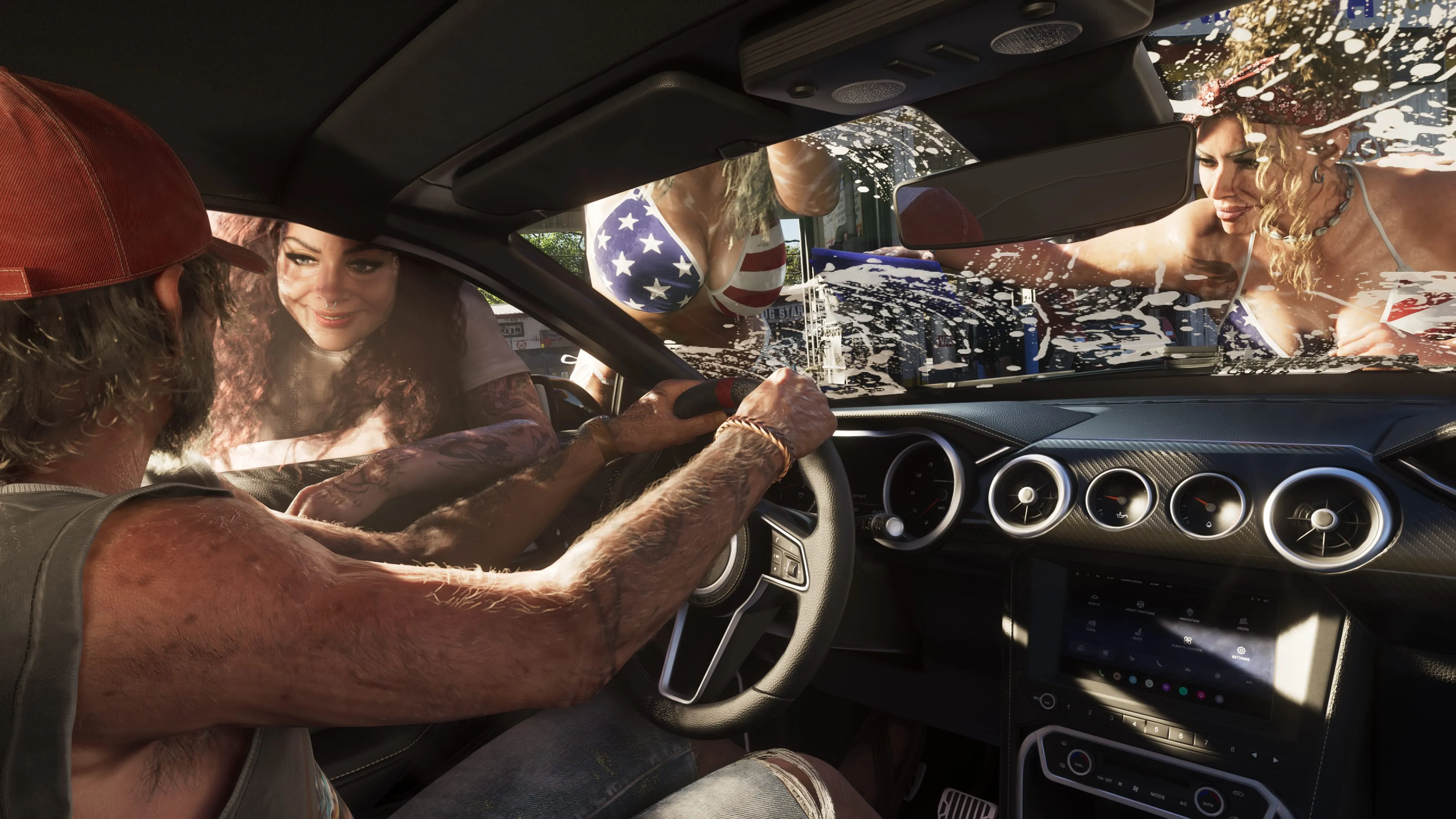
Image courtesy of Rockstar Games
Now Imagine All of That, But Better
This is the part that both excites and terrifies me. Everything Rockstar showed in August says the immersion dial is going somewhere it hasn’t been before - and this section, unlike the last version of it, is built on what Rockstar and the people who saw the game actually said.
A Body That Keeps Score
Rob Nelson told Dazed, “We want to enable as much self-expression as possible,” and the previews spelled out what that means. Food affects Jason and Lucia’s weight. Exercise visibly builds muscle. Time without sleep, or on a bender, shows on the characters. TGG got the mechanics from Nelson directly: eat too much and you get heavy, stop maintaining muscle and you lose it. The gameplay page has who said what. This is a game whose lead characters physically degrade when you play them badly. That is a feedback loop about your habits, drawn on the screen.
Police Who Remember You
The wanted system works from a description. GamesRadar+ counted four icons under the stars for your clothes, your face, your car and whether you’re together; TGG describes police logging that the pair were caught on CCTV and known by outfit, appearance and weapon. Change any of it and the net loosens. A world that remembers what you looked like an hour ago is a world you’re in, not a world you’re using.
NPCs That Might Actually Feel Alive
The big dialogue claims are a leak, and I’ll label them. In March 2026 a Reddit throwaway account claiming to have done audio QA on GTA 6 said the recorded lines for ambient characters alone ran “somewhere in the hundreds of thousands”, each tagged so it only plays when the right conditions line up - whether a pedestrian saw your crime or just heard about it, whether they recognise you, the time, the weather - with a decay system routing to rarer variants so you don’t hear repeats. GTA Boom’s write-up was fair about it: the line counts “can’t be verified” and “nothing here is confirmed”, though the framing “is consistent with how large audio pipelines actually work.” If a quarter of it is true, the city talks back.
The RAGE Reality Machine
And it looks like the trailers. Digital Foundry’s read on Trailer 2 was ray-traced global illumination “inherent to the way the game works”, strand-based hair, sweat that forms in patterns, at 30 frames on a base PS5. We covered the engine in our RAGE 9 breakdown. Combine that with a body that keeps score and police that remember your face, and what you get isn’t a game you play. It’s a place you visit. And visiting becomes living faster than anyone expects.

Image courtesy of Rockstar Games
Where This Is All Heading
Let’s zoom out. GTA 6 isn’t arriving in a vacuum. It’s launching into a world where the lines between games, social platforms and actual reality are already dissolving.
Games Are Already Becoming Worlds
Roblox reported over 120 million daily active users in the second quarter of 2026, who “spent over 29 billion Hours” on the platform in three months. That’s from its own earnings release. Fortnite hosts concerts. Rockstar now runs a roleplay server and a marketplace where people sell each other pieces of Los Santos. The metaverse everyone laughed at in 2022 arrived anyway - it just looks like a game.
The Five-Year Horizon
Now imagine GTA 6 - or whatever comes after it - with an online mode, roleplay Rockstar itself supports, and NPC systems built on whatever that leak was describing. A Vice City where the bartender remembers your order, where the cop on the corner has been watching you for weeks. Rockstar has confirmed none of this. It has built every piece of the runway.
I’m not saying this to be alarmist. I’m saying this as someone who’s spent thousands of hours in GTA Online and loved every minute. But I also know what it feels like when you catch yourself thinking about your in-game business during a real conversation with a real person. When your crew’s schedule takes priority over your own. The technology is about to make that pull exponentially stronger, and we should probably talk about that before November 19.
What Can We Actually Do About It?
I’m not going to sit here and tell you not to play GTA 6. That would make me the biggest hypocrite on the internet. But I think we owe it to ourselves and each other to go in with our eyes open.
- Track your hours. Not as a guilt trip - as awareness. If things are slipping IRL, that’s data worth having.
- Keep your real-world anchors. The friends you play with online are real friends. The friends you never see anymore because you’re always online need you too.
- Watch the spending. Four per cent of players fund the entire GTA Online economy, and the biggest single purchase in the leak was over a million dollars. If the online mode arrives with a store, check whether the money is coming from disposable income or from something that matters.
- Know the signs. The WHO’s definition is the checklist: impaired control, gaming taking priority over everything else, and carrying on despite the damage. Those aren’t character flaws. That’s a recognised condition with real help available.
Rockstar builds some of the most incredible experiences in entertainment. That’s not the problem. The problem is that incredible experiences are designed to be hard to leave - and the next one is going to be the hardest to leave yet.

Image courtesy of Rockstar Games
Final Thoughts
GTA 6 is going to be a masterpiece. I believe that with everything I’ve got. A body that keeps score, police that remember you, and a Vice City that looks the way the trailers look - I will be there on November 19 at midnight like every one of you. Our story length piece covers the roughly eighty hours one Rockstar developer’s own playthrough took, and that’s before anyone outside Rockstar has played it.
But I also think we’re entering an era where the question isn’t “is this game good enough to play?” - it’s “is this game good enough to live in?” And for a lot of people, GTA Online answered that years ago, one Shark Card at a time.
That’s amazing. And that’s terrifying. And I think it’s possible for both of those things to be true at the same time.
Play the hell out of GTA 6. Build your empire. Live your second life. Just don’t forget about the first one.
More from GTA6Hype: Check out our RAGE 9 deep dive, our look at the gameplay mechanics shaping Vice City, and the UGC piece on the creator platform Rockstar has built.
TLDR (For anyone who skipped straight to the bottom) 😉
Q: Is GTA Online really a “second life” for people?
A: For a lot of them, yes. Rockstar’s leaked internal data, as Kotaku reported it, shows about $1.3 million a day in revenue and $5 billion in Shark Card sales over ten years, with the biggest single purchases landing on Christmas Day. Roleplay servers take it further - Rolling Stone called the scene “a kind of contemporary crime-ridden Second Life.”
Q: How bad is the addiction problem?
A: Clinically recognised. The WHO added gaming disorder to ICD-11 in 2018 and says it affects “only a small proportion” of gamers. A 2024 meta-analysis put internet gaming disorder at 6.7% overall and 7.1% among adolescents. Lawsuits naming Rockstar and Take-Two among many publishers allege addictive design; nothing has been proven.
Q: How does GTA Online make so much money from this?
A: Around $500 million a year, from 4% of players. Only about one in twenty-five spent anything in the leaked seven-month window. The casino converts Shark Card money into chips you can never cash out, and is blocked in over fifty countries, with Australia added in July 2026.
Q: Will GTA 6 make this worse?
A: The single-player game has no store - Rob Nelson said “no” to microtransactions. But the immersion is real: bodies that change with food, exercise and sleep, police who work from your description, and a leaked (unconfirmed) dialogue system with hundreds of thousands of NPC lines. The more a world feels real, the harder it is to leave.
Q: What about the online mode?
A: Unannounced. Rockstar calls GTA 6 “a single player experience” and, per Jason Schreier, isn’t planning to discuss the next GTA Online soon. Rockstar does now run a roleplay server, nopixel V, and a paid mod marketplace for GTA 5.
Q: Should I be worried about playing GTA 6?
A: Not if you go in with your eyes open. Track your hours, watch your spending when an online store arrives, keep your real-world relationships strong, and know the WHO’s three signs: losing control, gaming taking priority over everything, and continuing despite harm.

Enjoy the second life all you want. Just keep an eye on the first one.
Ammo