RAGE 9 vs Genie 3: Is GTA 6 the Last Great Human-Made Game?
Deep dive into Rockstar's RAGE 9 engine vs Google's Genie 3 AI - exploring physics, procedural interiors, and why GTA 6 represents the final era of handcrafted gaming perfection.
Welcome back to the GTA6Hype.com inner sanctum. I’m Ammo, and today we are going deep - real deep.
While the rest of the internet is busy counting pixels on a license plate, we’ve been inside the “Vice City Hype Labs” dissecting the absolute collision of two worlds: the sheer, raw power of Rockstar’s RAGE 9 engine and the terrifying, “dream-logic” dawn of Google’s Genie 3 generative AI.
We’re witnessing two worlds collide: Rockstar pushing the boundaries of hand-crafted game design with years of meticulous development, while AI tools like Genie 3 are starting to generate interactive game-like environments from nothing but images and prompts. The tech is still early, but the trajectory is clear - and it raises a real question: could AI eventually create game worlds that rival what hundreds of developers spend years building by hand?
Grab your armor and a Sprunk; here is the definitive breakdown of why GTA 6 isn’t just a game - it’s the last stand for human-made digital perfection.
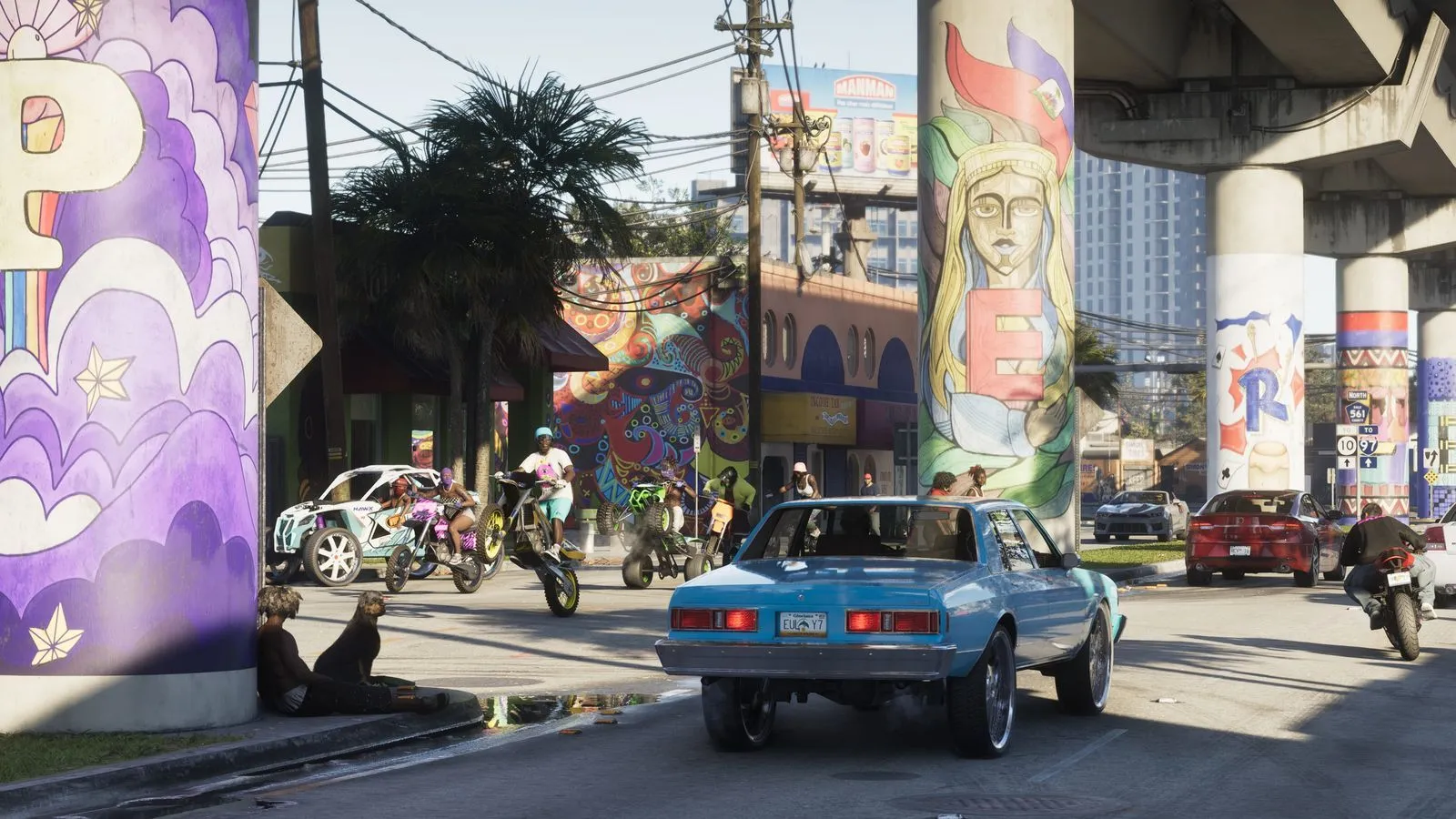
Image courtesy of Rockstar Games
The RAGE 9 Revolution: Physics You Can Feel
Rockstar isn’t just building a map; they’re building a “Clockwork Universe.” While other developers focus on pretty lights, RAGE 9 is obsessed with physicality.
Water That Actually Works
Forget the “texture planes” of the past. In GTA 6, water is a physically simulated volume.
-
The Hurricane Effect: The engine uses Fast Fourier Transforms (FFT) to simulate ocean waves that interact with wind and weather in real-time.
-
Gameplay Impact: Imagine a hurricane hitting Vice City. We’re talking storm surges that flood streets and actually change how your Buffalo handles (hello, hydroplaning!).

Image courtesy of Rockstar Games
No More “Ice Skating” (Runtime Retargeting)
Ever notice how characters in games sometimes float or their hands clip through objects? Rockstar’s patent filings reveal a “Runtime Retargeting” system that addresses this.
-
The Tech: The system uses inverse kinematics to warp the animation skeleton in real-time.
-
The Vibe: When Jason leans on a car or Lucia walks up uneven stairs, their feet and hands hit the surface with perfect precision. It creates a “groundedness” that makes the world feel heavy and real.

Image courtesy of Rockstar Games
The “70% Enterable” Dream: Procedural Interiors
The rumor mill has been buzzing that almost every building in Leonida is enterable. Patent US 10,987,587 B2 suggests this might not just be hype - it’s engineering.
Instead of hand-modeling every single kitchen, the patent describes a Tagging System. If a building is tagged as “Dilapidated” and “Modern,” the engine could assemble a room layout on the fly using a library of modular assets.
-
Persistence: The patent suggests that if you break into a house, move a chair, and leave, the game doesn’t save the whole room. It saves the “seed” and the “delta” (the change). When you come back, the chair is still exactly where you left it.
-
Why It Matters: This could allow for dynamic burglary missions on a scale we’ve never seen, without the “hallucinations” of AI-generated content.

Image courtesy of Rockstar Games
Google Genie 3 vs. Rockstar: Two Different Philosophies
While we’re hyped for RAGE 9, Google DeepMind’s Genie 3 generative AI represents a completely different approach to game creation.
Genie 3 works as a “World Model” - it doesn’t use traditional code to define gravity or physics; it has watched millions of hours of video and “learned” to predict what happens next based on patterns.
| Feature | Rockstar RAGE 9 (Deterministic) | Google Genie 3 (Probabilistic) |
|---|---|---|
| Logic | Strict physics & code | Statistical pattern learning |
| Consistency | Perfect repeatability | Evolving stability |
| Workflow | Code-based precision | AI-assisted creativity |
Here’s the thing: Genie’s approach offers insane creative possibilities - imagine describing a scene and having it generate instantly. As the tech evolves, we’ll likely see precision editing tools combined with that AI creative power. The reality is: major studios are already using AI tools, and Rockstar sure as hell isn’t sitting this revolution out.
The “Fake Leak” Forensics: Right now, if you see a “leaked trailer” where the text on a sign changes when the camera moves, or a character’s clothes morph behind a pole - that’s likely an AI-generated fake, not real GTA 6 footage. Rockstar’s world is hand-crafted; AI-generated worlds are still developing their consistency.
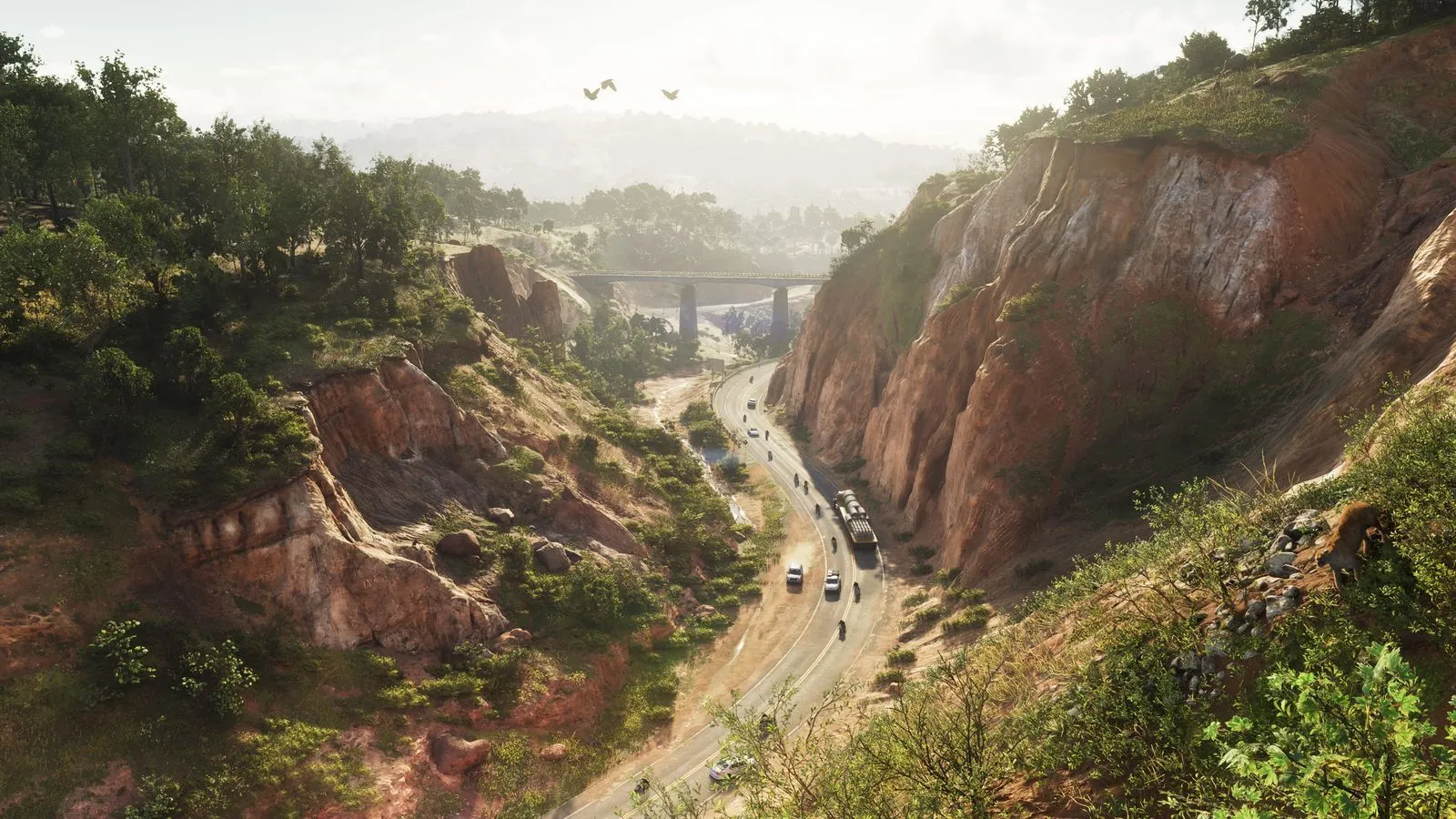
Image courtesy of Rockstar Games
The Hybrid Future: When Rockstar Meets AI
Here’s where it gets fu@king interesting. The future isn’t “one or the other” - it’s both working together.
Let’s be real: Rockstar is almost certainly already using AI tools in their pipeline. We just don’t know the full extent. But it’s not hard to see how systems like Genie could fit into their workflow - not to replace their artists, but to supercharge them.
How AI Is Likely Enhancing (Not Replacing) Rockstar’s Process
The 70% Enterable Buildings Problem: Hand-modeling thousands of interiors is brutal. But what if artists could use AI to generate the first pass of a living room, then apply Rockstar’s precision editing to make it perfect? You get the speed of AI generation with the quality control of human craftsmanship.
Dynamic Weather and Destruction: Imagine using AI to predict realistic damage patterns when a building gets hit by an RPG, or how floodwater should flow through Vice City streets during that hurricane. The AI handles the complex physics simulation; Rockstar’s artists ensure it looks fu@king incredible.
NPC Behavior at Scale: We’ve seen glimpses of complex NPC routines in the trailers. But scaling that to thousands of characters with unique daily schedules? AI could handle the procedural generation of NPC lives, while Rockstar scripts the memorable encounters and story moments.
Rapid Prototyping: Want to test how a new neighborhood should feel? Generate it with AI in minutes, test the gameplay, then have your environment artists refine the keeper ideas. Fail fast, iterate faster.
The key difference: Rockstar would be using AI as a tool in their pipeline, not as the pipeline itself. The creative vision, quality bar, and that signature Rockstar polish? That stays human.
The PS6 & AI Upscaling: Saving the Frame Rate
Let’s be real: GTA 6 is going to push console hardware to the limit. Leaks surrounding the PS5 Pro (Project Trinity) and PS6 suggest AI upscaling might be key to achieving 60fps.
Sony’s PSSR (PlayStation Spectral Super Resolution) technology could take a 1080p render and use machine learning to upscale it to a crisp 4K. Because of the dense crowds and global illumination systems we’ve seen in the trailers, native 4K 60fps would be a massive technical challenge on base hardware - PSSR might be the “secret sauce” that makes it possible.
The Living City: NPCs with Lives
Based on what we’ve seen in the trailers, Rockstar isn’t using AI to create the game, but to simulate the people living in it.
-
Social AI: From the trailer footage, NPCs in GTA 6 appear to have more complex behavioral patterns - they’re not just walking randomly, they seem to have destinations and purposes.
-
Contextual Awareness: The trailers show NPCs reacting realistically to their environment. If there’s a crash, they film it with their phones. If it’s raining, they seek shelter. It’s not just a background - it’s a society.

Image courtesy of Rockstar Games
The Verdict: The Last Fully Hand-Crafted Masterpiece?
GTA 6 represents the peak of what human-led game development can achieve - a masterpiece of manual craftsmanship, procedural logic, and decade-long refinement. It’s the industry standard for the next ten years.
But make no mistake: AI is already here, already changing how games are made. By the time GTA 7 rolls around in 2030+, we’ll likely see “Neural Game Engines” where worlds generate around you in real-time, guided by human creativity but powered by AI.
The question isn’t whether Rockstar will use AI - they almost certainly already are. The question is: will they be the ones who figure out how to blend human artistry with AI power better than anyone else?
What do you think? Are you ready for a Vice City where you can walk into most of the buildings? And are you excited or terrified about what AI-enhanced GTA 7 might look like?
Stay hyped. Take pity on noobs.
- Ammo, GTA6Hype.com
TLDR (For people that didn’t learn to read good) 📚
Q: What’s the difference between RAGE 9 and Genie 3?
A: RAGE 9 is Rockstar’s hand-coded physics engine - FFT water simulation, Runtime Retargeting for perfect character grounding, patent-protected procedural interiors. Genie 3 is Google’s AI that “learns” from watching videos and statistically “dreams” worlds into existence. Two completely different philosophies.
Q: Which approach is better for gaming?
A: Neither. The future is both working together. RAGE 9 gives you precise control and perfect consistency. Genie 3 offers insane creative speed and possibilities. The winning studios will blend human artistry with AI power.
Q: Is Rockstar already using AI?
A: Almost certainly yes. Major studios are already using AI tools in their pipelines. Rockstar isn’t sitting out this revolution - they’re just smart about keeping quality control human-led while using AI to supercharge their workflow.
Q: Will GTA 7 be AI-generated?
A: Not entirely, but expect neural game engines by 2030+. AI will likely handle procedural generation, NPC behavior at scale, rapid prototyping, and dynamic systems. Human artists will maintain creative vision, quality bar, and that Rockstar polish.
Q: Is GTA 6 the “last great human-made game”?
A: It’s the last fully hand-crafted masterpiece at this scale. GTA 6 represents the peak of what decade-long human-led development can achieve. Everything after this will blend human creativity with AI assistance.